Ongoing User Experience Research
Google Gemini · DeepMind
Evaluating voice input, screen adaptability, and personalization across Gemini mobile, Gemini Live and Gemini desktop.
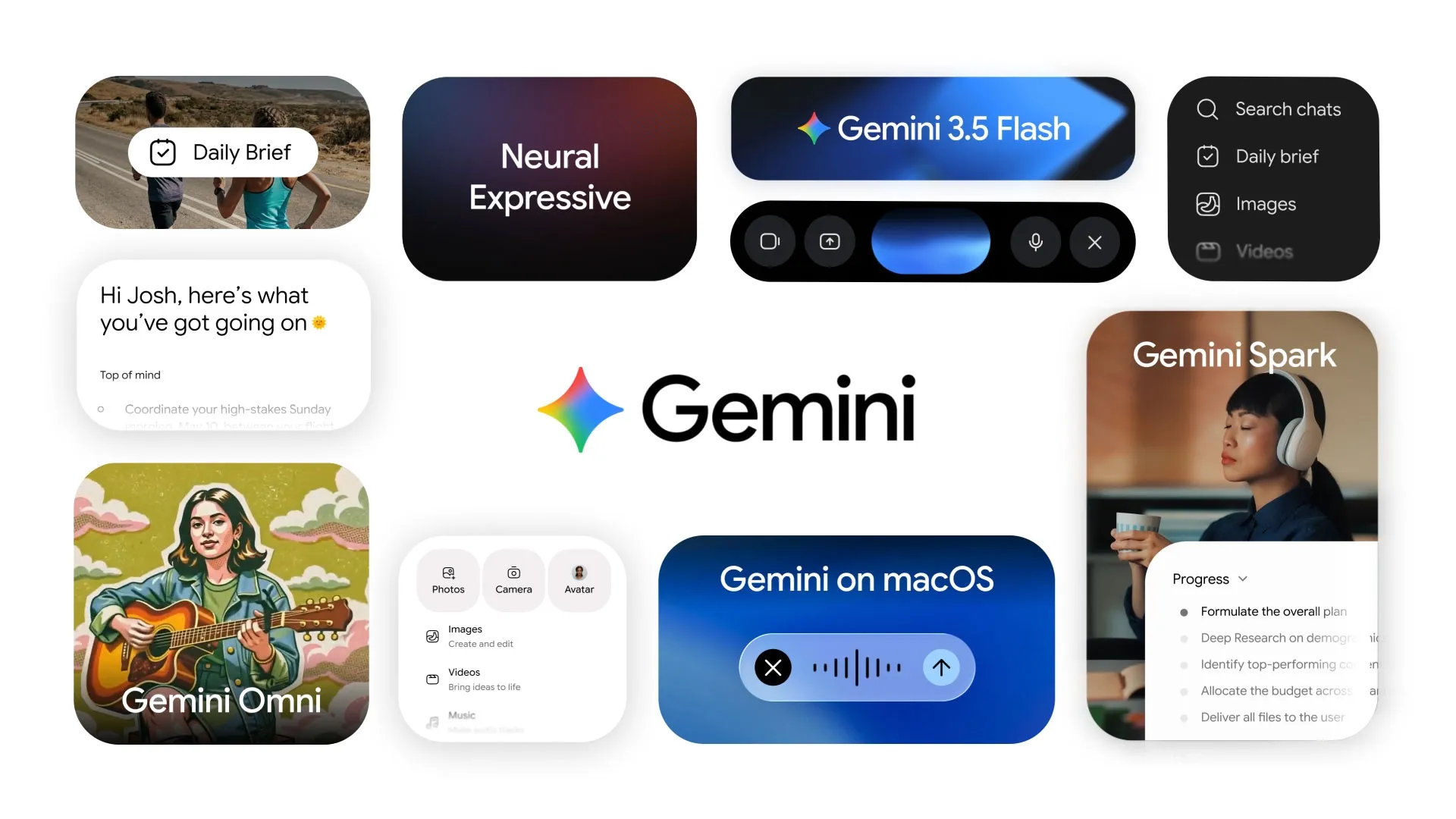
Google Gemini's capabilities, image credit - Google News.
Overview
As Generative AI evolves beyond traditional text-based chat, AI interfaces are shifting toward proactive, adaptive workspaces and fluid voice interactions. This case study highlights end-to-end UX research driving the evolution of Gemini Live, the Gemini App, and Gemini Desktop, establishing new interaction paradigms across complex multi-platform environments.
My Role
Lead UX Researcher owning the end-to-end research lifecycle from strategy, study design, and hands-on execution to data synthesis and executive readout presentations.
Research Strategy & Execution: Formulated research plans, managed participant recruiting pipelines, and led qualitative/quantitative testing sessions across multiple product phases.
Cross-Functional Leadership: Collaborated closely with Executive Design Directors, Staff Designers and Researchers, Product Managers and Software Engineering leads to translate research into strategic roadmaps.
Google Gemini Avatar UI - image credit - Google News.
Problem statement
Transitioning users from static text boxes to dynamic, multimodal workspaces creates novel interaction challenges. As AI systems proactively adapt layouts or converse in real time, users frequently face cognitive disorientation, context loss, and uncertainty surrounding control.
Key Challenges
- Managing Cognitive Load & Context: Preventing visual clutter and maintaining conversation context when users shift topics or transition between voice and text modes.
- Balancing Automation with Control: Identifying where users prefer AI automation versus where they demand direct, manual UI manipulation.
- Decoding User Mental Models: Translating subjective user expectations around voice interaction and workspace layouts into actionable engineering and product specifications.
Key Research Projects
1. Exploratory Discovery & Mental Model Mapping
- Designed longitudinal research frameworks to investigate how new and heavy users navigate fluid multimodal experiences in real-world settings.
- Investigated voice personalization expectations, categorizing user prompting behavior into direct acoustic descriptors versus character archetypes to define foundational product requirements.
2. Usability & Spatial Orientation Testing
- Evaluated adaptive layout choreography across Gemini App and Gemini Desktop environments, identifying critical usability friction points regarding cognitive load and prompt persistence.
- Uncovered user expectations for direct UI manipulation over repetitive text prompting, demonstrating that interactive workspaces significantly increase creative confidence and user engagement.
3. Evaluative Testing on Navigation & UI Affordanc
- Conducted comparative visual testing on home screen navigation and entry points to isolate visual grouping biases and prevent false mental models.

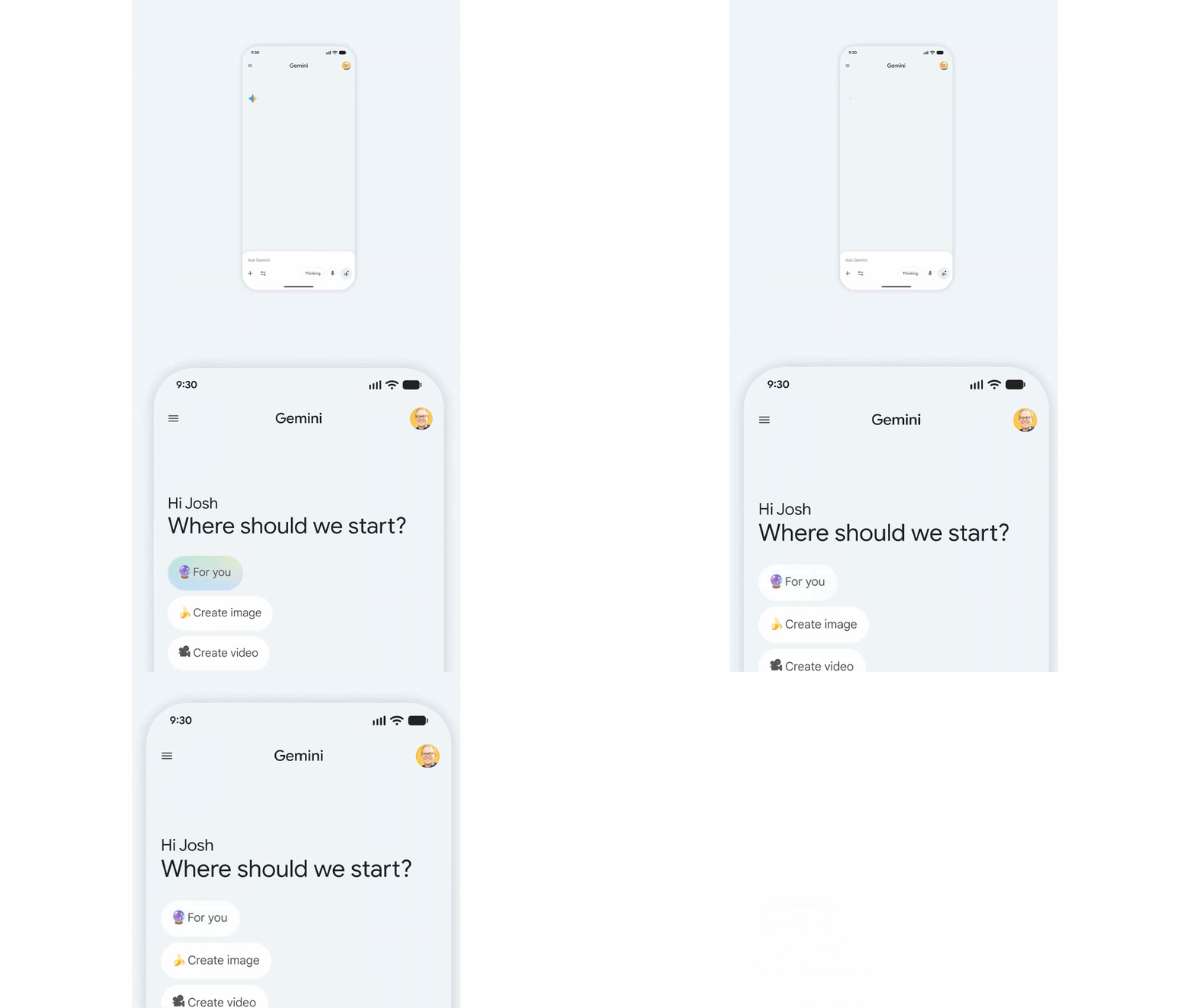
Google Gemini App UI - image credit - Google News.
Impact & Key Outcomes
Guided Executive UX Investment:
- Delivered actionable strategic recommendations that directly guided product roadmaps and executive design decisions for ongoing Gemini App and Gemini Desktop workspaces.
Drove Gemini Live Strategy:
- Uncovered core interaction requirements for Gemini Live, defining optimal visual card timing, persistent context retention, and fluid mode-switching behaviors. This research directly shaped Gemini Live launched at Google I/O 2026.
Established Voice Interaction Frameworks:
- Formulated user-centered requirements for speech pace, dynamic tone, and voice customization that established strategic priorities for the Gemini Voice team.
Optimized UI Affordance & Navigation:
- Identified and eliminated critical navigation friction points, directly influencing top-level UI architecture to ensure intuitive mental models across the current Gemini mobile experience.
Research Methods
- Longitudinal Diary Studies (dScout): Evaluated multi-day habituation, real-world task completion, and multimodal voice/text switching behaviors over 5–6 day study periods.
- 1:1 Moderated Usability Deep-Dives: Conducted in-depth prototype evaluations across mobile and desktop environments focused on spatial orientation and workspace navigation.
- Unmoderated Comparative Media Surveys: Executed targeted quantitative and qualitative evaluations (N=26) to test interface affordances, mental models, and top-level navigation clarity.
- A/B & Multi-Arm Testing: Compared variations in UI transitions, prompt behaviors, and aspect-ratio display modes.
😃 Oh, hello.
Feel free to reach out for collaborations or just a friendly hello at rdzva.ale@gmail.com